Tag Archives: thermography

The Safe Breast Cancer Screening Test Your Doctor Isn’t Telling You About!!!

It’s safe, effective, with no side effects or risks. Sounds too good to be true? it just might be…

Thermography is the topic of this weeks Dr Rachie reports.

I refer to it as “The Safe Breast Cancer Screening Test Your Doctor Isn’t Telling You About” because this was what popped up on Google when I searched for information.

Trudeau0

Image taken from www.lorencollins.net/trudeau/

Clued up sceptics would know this is one of the classic red flags to alert you to pseudoscience. In fact it has been used in the title of just about every book written by Kevin Trudeau, the infomerical billionaire from the US, who peddles all kinds of fantastical products and has been fined for doing so.

If you’re not familiar with the seven signs of pseudoscience, then it would be wise to become familiar with them to protect yourself from getting conned.

Dr Robert L Park published an article in the The Chronicle of Higher Education, Jan 31, 2003. in 2003, detailing the red flags to alert you to pseudoscience and the article has since been republished on Quackwatch.

1. The discoverer pitches the claim directly to the media.

2. The discoverer says that a powerful establishment is trying to suppress his or her work.

3. The scientific effect involved is always at the very limit of detection.

4. Evidence for a discovery is anecdotal.

5. The discoverer says a belief is credible because it has endured for centuries.

6. The discoverer has worked in isolation.

7. The discoverer must propose new laws of nature to explain an observation.

A little about breast cancer.

See Breast Cancer Australia for more information.

  • 1 in 11 women will be diagnosed with breast cancer before the age of 75.
  • Breast cancer is the most common cause of cancer related death in women in Australia.
  • The incidence of breast cancer has risen over 18% from 1995 to 2005.
  • In Australia in 2005, a total of 12,170 women and 95 men were diagnosed with breast cancer and there were 2,683 deaths.

So, what is thermography?

This technology was originally designed for US military use in night vision but also has many applications in medicine (Arora N. et al., 2008). The principle of medical thermography is the detection of small temperature differences in the body which are then transformed into thermal images that the practitioner interprets. The theory is that abnormalities such as malignancies, inflammation and infection emit increased heat that will appear as hot spots on images.

Breast thermography, also known as thermal breast imaging, is a technique that produces “heat pictures” of the breast, by measuring the temperature of the skin of the breast. The rationale for thermography in breast imaging is that the skin overlying a breast cancer can be warmer than that of surrounding areas.

Limits of thermography

Thermography was approved by the FDA in 1982 as an adjuct tool for breast cancer detection. Its applicability, however, was limited by the temperature resolution capability of earlier imaging technology, the bulky equipment necessary to perform procedures, and the general lack of computer analytical tools (Arora N. et al., 2008). Thermography is also limited in that it only indicates if a difference in temperature exists. The diagnostic significance of this information remains unclear. It has not been proven that performing thermography eliminates the need for other diagnostic studies, nor has it been demonstrated that any additional diagnostic value is provided by thermography.

Although thermography is a noninvasive low-risk procedure (i.e., no harmful rays are emitted), several disadvantages have prevented its widespread use. It requires a tightly controlled environment free from draft, temperature fluctuation, and humidity. It also requires a 20-minute to two-hour acclimatization period.

Does thermography detect breast cancer?
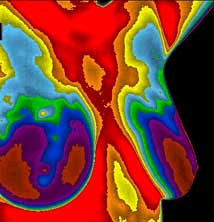
breast_thermographyIn 2004, the New Zealand Health Technology Assessment conducted a review of the scientific literature to establish the efficacy of thermography as a screening tool and adjunctive diagnostic tool. They scoured Pub Med, turning up 1,154 abstracts which matched their search criteria, from which 85 were selected for full text and three were used in the review. They reported;

“The evidence that is currently available does not provide enough support for the role of infrared thermography for either population screening or adjuvant diagnostic testing of breast cancer.”

Whilst there are studies demonstrating that thermography can be useful as an adjunct tool in breast screening (see Arora et al., 2008), this evidence is sparse and likely explains why cancer bodies and governments remains cautious about recommending the procedure.

BreastScreen SA has this information about thermography:

“According to several reviews there is no current scientific evidence to support the use of thermography in the early detection of breast cancer or in the reduction of mortality from breast cancer. The results of thermography in various studies are inconsistent, but overall, thermography produces an abnormal result in too many women who do not have cancer, and it misses cancers that are known to be present in other women.”

The scientific, peer-reviewed literature and professional societies do not support the use of thermography as a reliable indicator for the presence of breast cancer (Hayes, 2006).

And this also from the BreastScreen SA website; “There is a high level of consistency in the approach of numerous medical organizations from Australia and abroad in warning against the use of thermography for breast cancer detection. The following organisations support the use of mammography and do not support the use of thermography for breast cancer detection (valid as at May 2007):”

Excerpted from BreastScreen SA newsletter the GPs number 12, November 2007

Not that this prevents the alt med guys from spruiking it anyway, never mind the pesky evidence. One such case occurred recently when Mike Adams from the website Natural News reported on new findings about the risks associated with mammograms. No medical intervention is without risk and mammograms are no exception since small doses of radiation are used to image the breast tissue.

Several recent studies have shown that for women at high risk for breast cancer, getting early scans, beginning before the age of thirty, can increase the risk of getting the disease between 1.5 and 2.5 times. For this reason The US Department of Health and Human Services changed the recommendations for mammograms on November 19th 2009, advising that they should now be started at age 50 and performed bi-annually, up from 40 years of age.

Excerpted from BreastScreen SA newsletter the GPs number 12, November 2007

Among women who have BRCA1 and BRCA2 mutations, the lifetime risk of breast cancer is 36% to 85%, and the lifetime risk of ovarian cancer is 16% to 60% (Jantoi et al., 2008) therefore, regular screening from a young age is important. The BRCA1/2 genes are known as “tumour suppression genes” and as such are responsible for correcting DNA mutations; mutations that may well result from radiation damage (Kennedy D.A., et al., 2009). As such, is it important for women with these mutations to discuss the risks of mammograms with their doctor and consider alternatives, such as MRI and ultrasound.

Mike Adams on Natural News reported findings from a recent study about the risks of mammography as “Study verifies mammography screenings cause cancer!” which is a completely misleading interpretation of the findings. To reiterate, they may increase the risk by a much as 2.5 fold, but they do not cause cancer. So if you are unlucky enough to have the double mutation and have a 60% chance of getting cancer, with the increased risk of 2.5 fold, you then you have a 120% chance. Not very good odds, which is why many such women who have this mutation get double mastectomies.
mammogram

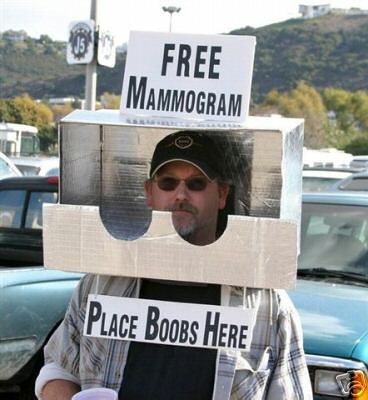
What a boob

Mike then proposed that women get MRIs or thermography instead. Thanks for the medical advice Mike.

In line with the unreliability of thermography, BreastScreen Australia has published a position statement on their website stating; “ The National Advisory Committee to the BreastScreen Australia Program does not recommend the use of thermography for the early detection of breast cancer” for the following reasons;

Studies have shown that a tumour has to be large (several centimetres in diameter) before it can be detected by thermography (Homer 1985). Screening mammograms have the ability to detect breast cancer at a much smaller size, and therefore to reduce deaths from breast cancer. Less than 50% of breast cancers detected by mammography screening have an abnormal thermogram (Martin 1983).

Excerpted from BreastScreen SA newsletter the GPs number 12, November 2007

Thermography was also cited in a recent parliamentary enquiry in South Australia into what the AMA called “bogus” therapies, along with colonic irrigation, claims made by some chiropractors about “subluxation”, cures for cancer, and some erectile dysfunction treatments. The AMA has concerns about “quackery”, telling the inquiry that unregulated practitioners are a “relative risk to patient health and have enjoyed immunity and lack of scrutiny from the legal and regulatory authorities which apply to the medical profession”.

Take home message

The take home message is that thermography is unreliable – missing known cancers and diagnosing non-existent cancers – and also expensive at around $200 US dollars. But don’t take my advice or that of Mike Adams from Natural News, talk to your doctor.

———

References
Arora N., et al. Effectiveness of noninvasive digital infrared thermal imaging system in the detection of breast cancer. The American Journal of Surgery. 2008; 196: 523-526.

Hayes Search and Summary™. Digital infrared imaging (thermography) for detection of breast cancer. Lansdale, PA: HAYES, Inc.; ©2006 Winifred S. Hayes, Inc. 2006 Apr 2.

Homer MJ. Breast Imaging: Pitfalls, controversies and some practical thoughts. Radiological Clinics of North America 1985; 23: 459-471

Jatoi I. and Anderson W.F., Management of women who have a genetic predisposition to breast cancer. Surgical Clinics of North America. 2008; 88: 845 – 861.

Kennedy DA, Lee T, Seely D. A comparative review of thermography as a breast cancer screening technique. Integrative Cancer Therapies. 2009; 8: 9-16.

Martin JE. Breast imaging techniques, mammography, ultrasonography, computed tomography, thermography and transillumination. Radiological Clinics of North America 1983; 21: 149-153

No Natural News, mammograms do not cause cancer.

Recently there have been some studies showing that for women at high risk of breast cancer, annual mammograms may increase their risk of contracting the disease.

Women with a genetic disposition or familial history need to begin screening at a younger age, some as early as 20 years of age, because they often develop cancer earlier than women of average risk. Since every medical intervention is associated with risks, there was some concern the low levels of radiation emitted during the mammogram may be a cancer risk. And because science is self correcting, (unlike some other types of self proclaimed “health care”) studies were conducted to test the hypothesis.

One such study, described in a press release on EurekAlert! (and I’ll explain why I’m discussing a study from a press release in a moment) reported that women at high risk of early onset breast cancer receiving annual mammograms showed an average increased cancer risk 1.5 times greater than that of high-risk women not exposed to low-dose radiation. The findings were presented at the annual meeting of the Radiological Society of North America.

Breast cancer is second only to lung cancers as the biggest cancer risk for women, so health authorities take such findings very seriously. Even if, in this case the authors warned that the study was a small sample size and should be interpreted with caution. Nevertheless, the American Cancer Society recommends that some women at high risk (greater than 20 percent lifetime risk) should have MR imaging (MRI) or ultrasound every year, typically beginning at age 30, instead of mammograms.

But one newsgroup is not treating these findings with caution. The alternative medicine website “Natural News” reported today that “Study verifies mammography screenings cause cancer “. Not only is the headline misleading but the text, adapted from the press release is rather inaccurate.

Take this line from the press release published on EurekAlert!;

Alternative screening methods such as ultrasound and MRI may be made available to younger women, but are generally used as an adjunct to mammography.

Which was reported by Natural News as;

Ultrasounds, MRIs, and heat thermography screenings are some alternatives that do not expose patients to radiation.

Somehow thermography was slipped in there are as a valid alternative to mammograms, even though it is not mentioned in the press release.

In fact, thermography is not recommended by the following cancer bodies (as of May 2007) as a tool for diagnosing breast cancer.
– BreastScreen Australia
– National Breast Cancer Centre
– Royal College of Radiologists of Australia and New Zealand
– American Medical Association
– American Cancer Society
– Cancer Research UK
– Mayo Clinic, USA
– Australian Therapeutics Goods Administration
– Medicare Australia.

This however, is simply more evidence for Mike the Health Ranger, author of the story (who by the way is not an oncologist, a doctor, or a scientist) that

…mammograms are really “repeat business machines” for the cancer industry.

He declares that this small scale, preliminary study is evidence that there is

…no reason for any women to ever receive a mammogram ever again.

And that;

Ultrasound and thermography should now be the new standard for breast cancer detection screenings, as they do not subject women to excess radiation.

Thanks for the medical advice Mike. Seems like the thermography business now stands to make a packet load. But he’s not finished yet,

In fact, mammograms represent the slickest marketing gimmick we’ve ever seen in modern medicine. It’s a technology that recruits new patients by actually causing the disease is claims to “detect.”

Well then it’s not doing a very good job, since this only works for women at high risk already.

But, there is a very good reason why thermography is not the preferred method for detection of breast cancers and no Mike, it’s not because of the “Big Cancer” wanting to line it’s pockets. It’s because it it not a very sensitive technique, therefore it can miss cancers.

In line with this, the following statement appears on the Breast Screen website

“Studies have shown that a tumour has to be large (several centimetres in diameter) before it can be detected by thermography (Homer 1985). Screening mammograms have the ability to detect breast cancer at a much smaller size, and therefore to reduce deaths from breast cancer. Less than 50% of breast cancers detected by mammography screening have an abnormal thermogram (Martin 1983).”

So it appears that if women only use thermography, there is a much greater risk that their cancer will be missed.

The final word goes to the study:

In general, early detection with mammography and prompt treatment can significantly improve a woman’s chances of survival. More than 90 percent of women whose breast cancer is found in an early stage will survive. For young, high-risk women and their doctors, it is important to weigh the benefits against any potential risk when making a decision about annual breast cancer screening with mammography.

So whilst mammograms may best be avoided if you are a woman in a high risk group, for others they are the most sensitive technique currently available for early breast cancer detection. This study certainly does not say they “cause cancer” and you should certainly not be taking advice from an alt. med. website or from a guy who makes his living from pimping alt. med. products.

And likewise, don’t take advice from me. Talk to your doctor.

References: Homer MJ 1985: “Breast Imaging: Pitfalls, controversies and some practical thoughts” Radiological Clinics of North America 23: 459-471. Martin JE 1983: “Breast imaging techniques, mammography, ultrasonography, computed tomography, thermography and transillumination” Radiological Clinics of North America 21: 149-153

—

Listen to Dr Rachie reports this week on the Zone for more information about thermography for breast cancer. Woo!

Regulating the unregistered – a code of conduct for quacks

Have you ever heard of a friend having a bad time with an alternative practitioner? Maybe their acupuncturist left them bruised and battered or their homeopath told them they could cure their incurable disease with an expensive potion, only it wasn’t to be? Maybe it’s happened to you? But what would you do if this did happen to you? Who could you turn to for help or to make a complaint?

For many years, unregistered practitioners such as naturopaths, acupuncturists, reiki practitioners, massage therapists, iridologists and the like, have been without any accountability for selling bogus or dangerous products or services.

In Australia, we have the federally controlled Therapeutic Goods Administration (TGA) which is responsible for “safeguarding public health and safety in Australia by regulating medicines, medical devices, blood and tissues”. But this does not include unregistered and alternative health practitioners. In NSW, a Code of Conduct for Unregistered Practitioners was released on August 1st, 2008. The code consists of 17 sections, covering such matters as;

practitioners are to provide services in a safe and ethical manner, are not to financially exploit clients and practitioners are required to have a clinical basis for their treatment”.

The code is designed to fill a loophole for the regulation of health providers who are not covered by a registration body, meaning that although the public could lodge a complaint about a practitioner, the regulatory bodies could do little more than slap them on the wrist. Whereas this new legislation means they can be banned from practicing either for a specific period or permanently. The code is administered by the Health Care Complaints Commission (HCCC) and if breached,

the Commission has the power to impose a prohibition order and/or issue a public warning about the practitioner and their services. A prohibition order bans a practitioner from providing health services, or places conditions on their provision of health services, for a specified period or permanently. It is a criminal offence to breach the order”.

But not every state in Australia has such a code for alternative health practitioners. (One wonders if Queensland is exempt since there seems to be so much woo in this state). For example South Australia (SA) does not, but a parliamentary inquiry is currently underway which plans to change this. Labour MP Trish White set-up a Social Development Committee inquiry in 2007. Its brief was to investigate “bogus, unregistered and deregistered health practitioners” and to develop a way to regulate the growing number of people making false claims about their ability to cure. White hopes the inquiry will expose the charlatans and work out ways to stop them popping up again under different names.

The current inquiry is spearheaded by the state head of the Australian Medical Association (AMA), Dr Peter Ford, the proposal is modelled on the NSW code. The impetus for the introduction of such a code came from Dr Ford as a mechanism for regulating quacks. Dr Ford told the inquiry that the unregulated practitioners are a “relative risk to patient health and have enjoyed immunity and lack of scrutiny from the legal and regulatory authorities which apply to the medical profession”.

In his submission about “bogus” doctors, he highlights colonic irrigation, thermography, subluxation and cancer cures as some of the more dangerous alternative medicine treatments. AS previously mentioned on Dr Rachie Reports, colonic irrigation can result in tearing of the colon and septicemia, or chronic depletion of electrolytes and death.

Thermography is a tool promoted as a way to detect breast cancer, but the AMA says it is unreliable, missing known cancers and diagnosing non-existent cancers – and further it is expensive. Chiropractic subluxations or spinal problems, can lead to other health complaints. The AMA is concerned about children being subjected to unnecessary X-rays for what is a controversial diagnosis and treatment (see here for more information). Regular listeners to Dr Rachie will remember that chiropractic manipulation has lead to death from tearing of arteries in the neck.

Dr Ford also cites fanciful claims of cancer cures as particularly insidious. And as is evidenced by some of the complaints currently being heard as part of the inquiry, it seems this is an urgent inclusion. He also cited other therapies, such as alternative massage therapies, Vega testing and coffee or chamomile enemas are “untested and potentially harmful”. Vega testing is as food allergy test, reminscent of alternative hair analysis, which claims to identify different food allergies and then prescribes you a special diet.

QuackWatch describes the Vega test as “…used to diagnose nonexistent health problems, select inappropriate treatment, and defraud insurance companies. The practitioners who use them are either delusional, dishonest, or both. These devices should be confiscated and the practitioners who use them should be prosecuted”.

Recently an article appeared in the local Adelaide press about a health practitioner treating cancer sufferers with massage, home-made remedies, and Kentucky Fried Chicken (KFC). The Favira Clinic, run by “miracle worker” Elvira Brunt uses a type of massage to change the way blood flows through the body, and this is supposed to cure terminal illnesses. Her supporters call her a gifted healer who can cure cancer. Her detractors have told a parliamentary committee that she takes money from vulnerable people, charging hundreds of dollars for a few precious minutes, paid in cash, with no receipt.

The AMA claims that she tried to convince the parents of a young leukemia victim to delay giving her treatment. The girls’ GP eventually told the committee the delays had a devastating effect;

….the interventions by the bogus practitioner served only to reduce the opportunity of giving the girl the best chance of a cure…..and when the cure could not be achieved she was deprived of optimal palliative care”.

Even more bizarre, Brunt apparently advised the girl’s father to give her the aforementioned KFC to get her kidneys functioning properly. The girl has since died. Her GP said; “People battling serious or terminal illnesses can be desperate and will sometimes hand over large amounts of money for quite useless treatments. We would like to think that the public is protected from such charlatans”.

Also reported to the inquiry is a man known as Lubo Bitelco who is alleged to have promised a woman a “50 percent” cure for cancer through a technique known as vaginal blowing, during which she had to move up and down on the bed saying “oh boy!”

In NSW, making claims of curing cancer or other terminal illnesses was outlawed in August 2008 with the introduction of the code. According to section 5, part 1 of the code; “A health practitioner must not hold himself or herself out as qualified, able or willing to cure cancer and other terminal illnesses”.

Also according to section 17 of the Code, Health Practitioners (with some exceptions such as the ambulance service and private hospitals) must display the Code and information about the way in which clients may make a complaint to the HCCC if necessary. These documents are available as easily downloadable pdfs from the Department of Health and the HCCC websites.

I am currently making enquiries as to whether it is an offence if the code is not displayed. If this is the case, it should make for an interesting visit to the Mind body Wallet festival at the end of this month, where all manner of fantastical woo is on display, with only the NSW department of health and the TGA are conspicuous by their absence.

I am personally very pleased to see the code introduced and hope that SA expect something similar. One expects Dr Peter Ford is not going to let these “wide-ranging ratbags” get off the hook that easily. He is a very active campaigner for science based medicine and features regularly on local ABC radio in SA.

What interested me most about the code is how it will be implemented. For example, can I dob in a website that claims to treat cancer with oxygen, water, sunlight and sleep? In accordance with Section 5,


health practitioners are not to make claims to cure serious illnesses”

including cancer, but do they actually have to state the word “cure” in their promotional material? What if they just infer they can cure an illness?

I was particularly interested in Section 12 which states that health practitioners are not to misinform their clients. Part 2 states that a health practitioner must provide truthful information to his or her qualifications, training or professional affiliations if asked. So, does this mean the end for people posing as doctors with bogus or on-line PhDs? One can only hope.

Section 3 is also interesting and has potentially far reaching consequences.

A health practitioner must not make claims about the efficacy of treatment or services if the claims cannot be substantiated”.

Sounds like curtains for KFC and “water can cure incurable diseases”. I will be very interested to see what impact the code has on alternative and unregistered practitioners in NSW.