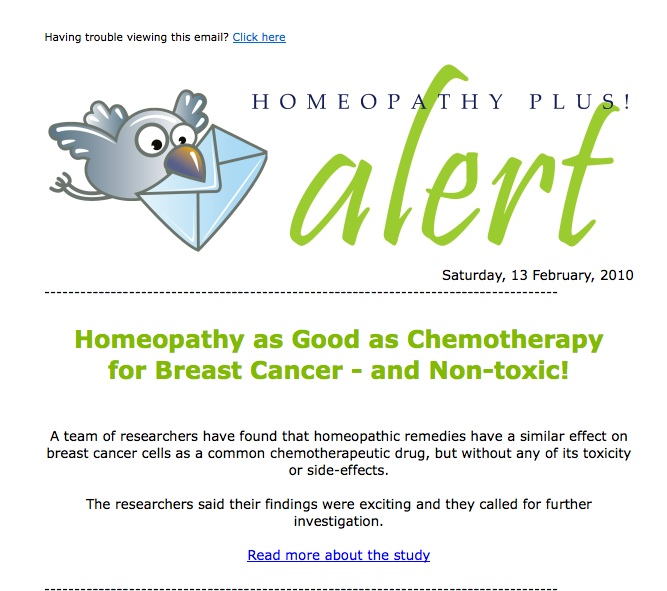
When this appeared in my inbox yesterday, courtesy of Richard Saunders (who was kind enough to ask me if I was sitting down first) I initially *facepalmed*, then sought about getting the original paper where this apparent break through research had appeared (thanks to @xtaldave for the full text).
The paper that had apparently found homeopathy to be as effective as chemo for breast cancer (according to Homeopathy Plus!, yes those guys), was published in the International Journal of Oncology* and entitled “Cytotoxic Effects of Ultra Diluted Remedies on Breast Cancer Cells.” (Click the link for the full pdf of the study).
The paper examines the effects of ultra-dilute remedies (read:homeopathy) on the induction of cell death in two cancer cell lines (commercially available MCF-7 and MDA-MB-231) and one immortalised control cell line, (HMLE).
The authors use several remedies already in use for the treatment of human breast cancer developed at the P. Banerji Homeopathic Research Foundation in India, Kolkata;
Carcinosin, 30C; Conium maculatum, 3C; Phytolacca decandra, 200C and Thuja occidentalis, 30C (for an explanation of how dilute these remedies are see here).
All remedies were diluted in 87% “extra neutral alcohol” and succussed, including the alcohol used as the control solvent.
The authors analysed each remedy with high performance liquid chromatography (HPLC) to look for differences, then measured cell death in cell culture in response to increasing doses and increasing time of incubation with each remedy. These measures include the MTT assay for cell viability, Annexin V and PI for apoptosis, FISH for DNA breakage and Western blots to measure activation of cell cycle proteins.
Technically the paper is quite well written. The problems lie with the data. And these problems are so massive, I wonder how they got by the reviewers. I don’t know whether they were dozing when they reviewed this paper, but I could immediately see some big fat gaping holes in their results.
First up a few pointers;
“The experiments were conducted in triplicate and repeated at least twice in each case of remedy”
This would not get past me. It is accepted scientific convention that experiments are done at least three times (not two) and also in triplicate, giving you a final “n” number of 9. These studies were done in cell culture, meaning there is plenty of material for experiments to be repeated as many times as you wish. So why were they only done twice? Three is convention because it gives the study more statistical power.
Ah statistics, huh?
There is a distinct lack of statistics in this paper, by which I mean there are none at all. As my friend Jo said; “Nary a p-value nor a confidence interval to be seen”. Which begs the question, how can you get a paper accepted in a peer reviewed journal without doing an statistical analysis?
Really? No, I mean REALLY? This is why I suspect the reviewers were dozing or drunk.
And by not doing any statistical analysis, you can not make any statements about whether the treatments are different to each other. Statistics uses algorithms to calculate mathematical differences with a degree of confidence (usually 95%) so that we don’t rely on visual interpretation, which is notoriously unreliable. But this doesn’t seem to have bothered these authors, or the reviewers.
So let’s look more closely at the results.
Firstly the HPLC.
Oh wait a sec, there are no results shown for HPLC. And neither do the authors say “no results shown”. They just make some rather confused statements about what they think they saw and move on. What?! I need to see the chromatograms. What possible reason could they have for not including this data, especially when they go on to describe it so badly in the text.
“All four remedies had very similar HPLC chromatograms to each other, with only trace amounts of limited number of peaks. They were not significantly distinct from the solvent and they lacked the distinct peak seen in the solvent.
So, this means that all the remedies were the same, ie. no different to the solvent and no other peaks indicating any ingredients. But then they contradict themselves by saying that the remedies did not have the solvent peak? Fail.
And then;
“The chromatogram of the untreated and treated solvents appeared identical, indicating that succussion did not cause chemical changes in the solvent.”
Okay, but don’t some homeopaths claim that succussion does have an effect on the chemical structure of the water/solvent? Isn’t this how they explain that homeopathy works? I can only guess SINCE WE CANNOT SEE THE CHROMATOGRAMS, but what you are saying is the remedies and the solvent were exactly the same, meaning they are solvent.
No surprises there.
What about the cell death studies?
So let’s look at the cell death studies since these constitute the crux of the study’s aims. That is, to determine if these ultra dilute remedies can induce cell death in cancer cell lines.
So here we have results for all three cell lines, two cancerous and one control, and they are all treated with a control (the 87% alcohol solvent) or the remedies and death measured by MTT assay. Here’s how they describe it in the text;
“Interestingly, the inhibitory effects on cell viability of the remedies in both the MCF-7 and MDA-MB-231 cells were distinctly greater for each of the doses tested than those seen in cells treated only with solvent.”
Which translates as the treatments killed the cells better than the solvent alone. Okay, so it looks like it did when you eye ball the histograms, but you have no evidence for this – you didn’t do stats, therefore you cannot say this! Sheesh, where did you learn to write science?
But why not keep the fail going;
“MCF-7 cells were found to be more sensitive to all four remedies than the MDA-MB-231 cells”.
Again no statistics, so this statement cannot be confirmed. When you do science properly and you run statistical analysis, you are entitled to say, “MCF-7 cells were found to be significantly more sensitive to all four remedies than the MDA-MB-231 cells”.
Unless you’re these authors, then you just get a great big FAIL stamp on your work.
Also note that they state that the control treatment (that is the solvent) also induced cell death in all cell types;
“As shown in Fig. 1A, the solvent reduced the viability of all three cell types; the overall reduction in cells at different doses of solvent was about 30% for MCF-7, 20-30% for MDA-MB-231 and 20% for HMLE cells.”
Ummm, hold on a sec.
This is your control treatment, which means it should not be causing cell death. It is designed to be inert, functioning as a carrier of your treatment, in order that you can measure the impact of the treatment alone. If your solvent or vehicle is killing your cells you have a fundamental problem. You need to go back to the drawing board and find a different solvent to deliver your treatment.
This is a very big problem right here.
If the cell death induced by the solvent is significant, then the rest of the paper is worthless. But because there are no stats here, there is no way to tell if death by the solvent is significant. According to the above statement, the alcohol killed ~30% of the cancer cells compared to no treatment at all. Although this effect was increased when the treatment was present, there remains a large problem with your model if your solvent is killing the cells.
Perhaps this explains why there are no stats in this paper? Because they may in fact show that the “inert” solvent also significantly kills the cancer cells? Once again, there is no way for me to know this without access to the raw data, or the statistical analysis.
Man, how the hell did this embarrassment get accepted?
Well now that I have revealed a fundamental flaw in this tripe I have lost the will to continue. There is much more fail herein however, I mean we are only at Figure 1 remember.
So I will cover just a few more things that are also glaringly obviously wrong with this paper, then I will send a large bottle of 87% alcohol to the editorial board and encourage them to keep up the good work of smiting the peer review process and science in general.
General lack of quantitation of results in this paper.
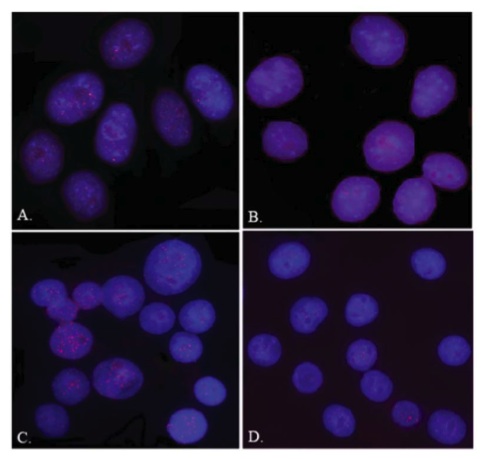
Figure 3 (left) shows fluorescent microscopy data for DNA breakage as measured by FISH assay. But where is the quantitation of this data?
The authors show a representative image for each treatment, and this is usually acceptable if you then measure large numbers of cells and report on such changes with numbers (see below).
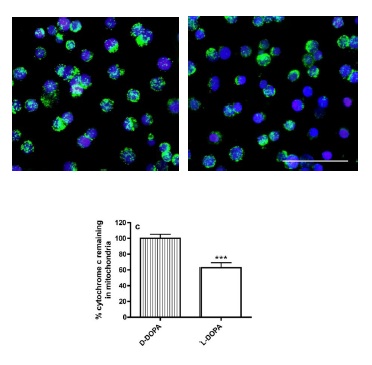
Dunlop et al., in press. Panels are representative DAPI/FITC overlay images of at least 10 images taken from triplicate wells. Histograms are mean + SD of 3 independent experients, incubations in triplicate, n = 9, p < 0.001 1-way ANOVA. Tukeys post-hoc analysis.
Further, even in the fluorescent images the authors only show a maximum of 14 cells. What the hell can you glean from 14 cells? They even say;
“At least 200 cells from treated and untreated samples were analyzed for mitotic index and telomeric DNA signals with a Nikon Eclipse 80i microscope equipped with fluorescence attachment and a Photometrics CoolSNAP HQ2 monochrome digital camera.”
So where is this data? Not in this paper, I can tell you that.
Next up Western blots.
Then they move onto Western blots. Actually this looks like the most resolved part of the paper. They have normalised everything to beta-actin as convention goes, and they have indicated the time of exposure to treatments. But as I mentioned earlier, if their control treatment 87% alcohol, is killing cells, then what can we glean from this data? Well not much except the effect could be an additive effect of the alcohol and treatment. There is no way to differentiate the impact of the treatment versus the control.
Flow cytometry, not quantitated either.
Sigh. I spend most of my days doing flow cytometry, so I am pretty familiar with how it works and what are the accepted ways to present the data. This is not one of them.
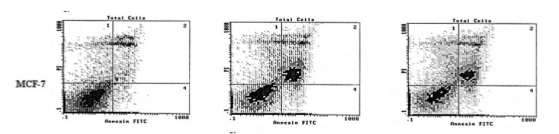
The assay they use (Annexin V and PI) is a common one and I use it often. Standard procedure is to count ~10,000 cells for each condition, then plot your results on a graph, like this (see left below).
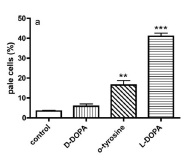
Dunlop et al., in press. Flow cytometry analysis of lysosomal destabilisation in THP1 human monocytes with acridine orange as a probe. Mean & SD of three independent experiments, incubations conducted in triplicate (n = 9), ** p < 0.01, *** p < 0.001, 1-way ANOVA, Tukeys post-hoc analysis.
You might also show your scatter plots as they have done above, as a nice visual demonstration of how the cells respond to the treatment, but this is not quantitation.
I’m going to stop there. I won’t even bother dealing with the discussion and conclusions, because by my analysis, they are based on flawed data.
One thing I will say about Homeopathy Plus! yelling “Homeopathy as good as chemotherapy for breast cancer” is not a conclusion you can draw from this study.
For all the reasons I have addressed above as well as the really obvious point that these studies were conducted in cell culture. This is a very different situation to a whole animal.
Cells bathing in a bath of homeopathy is very different to the processes which occur in vivo, for example the treatment must survive the low pH of the stomach, cross the gut, escape metabolism in the liver and get to the site of the cancer then do it’s job. This is a very complex process and very difficult to control. Studies in cell culture can provide data about the mechanism of action of a compound, but rarely do they relate to the processes in a human.
Never extrapolate results from a culture dish to a whole animal. You will undoubtedly be wrong and look like a fool.
Ooh, did someone say Homeopathy Plus!?
Listen to Fran Sheffield from Homeopathy Plus! talk about how homeopathy works here (mp3, 3:19).
*The International Journal of Oncology, impact factor 2.234, fail factor 10^23.
Browse Timeline
Comments ( 54 )
[...] effects of homeopathic remedies are all down to the alcohol content. Just like Frenkel et al. (see Dr Rachie’s post and Orac’s [...]
Dynamised Preparations in Cell Culture? « Xtaldave's Blog O'science added these pithy words on Apr 06 10 at 9:51 pm[...] to be nothing more than wishful thinking, or the more recent cell culture papers by Sunila et al or Frenkel et al, they have all been shown to be poorly designed experiments, which more often than not, report the [...]
Quick follow-up to “Homeopathy is Witchcraft” « XtalDave's Blog O'Science added these pithy words on May 19 10 at 9:26 pm[...] biologia avrebbe potuto accettarne la pubblicazione), se volete potete leggervi un ottimo debunking qui. Vi basti però sapere che questo paper è stato pubblicato con un numero di esperimenti pari a [...]
Un nuovo fronte « Fabristol added these pithy words on Jun 05 10 at 7:49 am[...] of them I happen to know very well, since I spent the better part of a Saturday back in February debunking the entire paper. The reason I did this was because Richard Saunders had received an e-alert from [...]
» A win for science, scepticism and common sense in the House of Commons added these pithy words on Jun 27 10 at 9:10 pm[...] in not working against breast cancer [...]
Dave’s links of the week, 28 June 2010 – Dave Hodgkinson Photography added these pithy words on Jun 28 10 at 5:36 pm[...] at low concentrations, can have profound effects on cells. For more information see take-downs by Dr Rachie and Orac. It is also worthy of note that it appears that an unwitting author on the paper has come [...]
Frenkel rides again « XtalDave's Blog O'Science added these pithy words on Jul 02 10 at 7:55 pm[...] him if he’d read the (deeply flawed) scientific paper that it quotes and pointed him to a critique of the paper. In short, I warned, the study is seriously flawed and the results in the paper are not to be [...]
Winchester’s MP Steve Brine supports Homeopathy Motions! « The Hampshire Skeptics Society added these pithy words on Jul 03 10 at 6:16 pmIlijas added these pithy words on Feb 14 10 at 8:01 pmIs it possible to charge the review panel of the journal for crimes against humanity? Or at the very least crimes against science?
.I remember even from my undergrad degree (biology) that submitting any assessment task without the data that I was discussing was a major no-no.
.If that standard applies to undergrads, then why on earth is this journal allowing such tripe to get through?
.And I just listened to the Fran Sheffield mp3 drivelling on ad nauseum about how marvellous and thrilled she is about using homeopathy, how “succussion & potentisation” leave an imprint of the “energy” in the water blah blah blah. And she just knows it works, just knows!
.One thing that becomes clear from listening to her is that stupidity is very babblesome, and has that nice soothing “healing” tone in the voice.
.Thank you for putting this one up, it’ll be yet another snowflake unleashing an avalanche of destruction in the hands of woo-woo.
.Forewarned is forearmed. Good work, Dr Rachie!
Ilijas added these pithy words on Feb 14 10 at 8:12 pmspeaking of homeopathic nonsense, you’ve gotta listen to this incomprehensible drivel on the homeopathy world community website, which is a response to the 10.23 campaign:
http://www.homeopathyworldcommunity.com/video/masshomeopathicoverdosemov-1
Ilijas added these pithy words on Feb 14 10 at 8:13 pmPS: you can view Fran Sheffield’s pic and a few messages between her and Meryl Dorey on this website.
batarista added these pithy words on Feb 15 10 at 12:25 amNice work.
The abstract of the paper analysed
Frenkel M, Mishra BM, Sen S, Yang P, Pawlus A, Vence L, Leblanc A, Cohen L, Banerji P, Banerji P. Cytotoxic effects of ultra-diluted remedies on breast cancer cells. Int J Oncol. 2010 Feb;36(2):395-403.can be read here.
If you do not have a private or institutional subscription to the Journal, it’ll cost you 20 euros for the pdf file.
batarista added these pithy words on Feb 15 10 at 12:34 amD’oh! You have the link already – I fail :>)
Rob Chippendale added these pithy words on Feb 15 10 at 12:56 amWhat can I say Dr Rachie!! … other than to tell all those who are reading this to google the expression “Complete and Total Legend” and you will get only ONE result … a pic of a smiling Dr Rachie! … keep up the great work!
JohnW added these pithy words on Feb 15 10 at 3:26 amWow this is an epic fail study. So, if I read the article correctly, they used 87% alcohol as the solvent to see if cells die when immersed in it. Maybe they should have just gone to a local liquor store and buy some 190 proof (i.e., 95% alcohol) Everclear. They then could have seen if it, when consumed (of course, shaken not stirred), killed a few brain cells. Perhaps they did and this explains why they left out the statistics.
Bill added these pithy words on Feb 15 10 at 7:48 amBut what can be done about this? There will almost certainly be some credulous women who will die because of this paper.
Grendel added these pithy words on Feb 15 10 at 8:53 amI’m with Bill – this will end up with people dying. And JohnW I think that the paper’s reviews have discovered Everclear.
AndyD added these pithy words on Feb 15 10 at 1:35 pm87% alcohol = non-toxic??? It’s hardly a healthy indulgence.
BroomHilda added these pithy words on Feb 16 10 at 3:22 amAs an RN, I of course know homeopathy is crap. Pragmatic economics dictates it would be so. If a dilute solution of X would cure Y, you can bet that we’d be using it instead of expensive conventional medicines. Believe me, no one will squeeze a penny tighter than hospital administrator.
batarista added these pithy words on Feb 19 10 at 1:46 amOne would have thought that, in the intervening years, this study would have been replicated or developed. A casual search of Google Scholar reveals 9 papers citing Pathak et al, yet, despite the call for further investigation, I don’t see a follow-up study.
Am I expecting too much, too soon? Clearly, the homeopathic community have already accepted this paper as incontrovertible evidence in their cause.
I would appreciate a professional comment on whether this observation is true, and if so why (beyond the analysis given on this blog).
batarista added these pithy words on Feb 19 10 at 2:00 amYikes: the missing link.
One would have thought that, in the intervening years, this study would have been replicated or developed.
Will engage brain and try harder :>)
Rich added these pithy words on Feb 19 10 at 5:04 amTo RN,
.Does the oncologist and hospital “pay” for the conventional treatment or get reimbursed for it? I am not defending the science of this particular paper. But I am acutely aware that, by and large, trials can only be afforded by entities that stand to make money. If you scour the literature, most research starts with a natural component that is helpful, then they proceed to patent the idea, create a synthetic (sometimes stronger) version of the natural compound that they can own, create a research and development drug company and pitch their idea to investors, hoping to get $$ to do more advanced preclinical on bigger and better animals and then human trials and sell the rights somewhere along the line. All this so a treatment can be deemed FDA approved and reimbursable in an oncology clinic or hospital. There is even arguably a hesitancy of oncologists to steer patients towards oral medications since the reimbursement is far less. In other words, institutional cancer treatment is not solely a battle of ideas. There are definite financial necessities and incentives contorting the process.
.Sometimes NIH or NCI will fund a study oustide of the financial box. But not very often, it seems.
.As the oft repeated refrain of studies goes: further studies are warranted.
dt added these pithy words on Feb 25 10 at 10:45 pmI thought the whole point of homeopathy was that it worked holistically on the entire organism, stimulating the body’s immune system and regulatory mechanisms through its magical energy.
So why are homeopaths doing in vitro studies in cell lines? – this is quite unrepresentative of homeopathy’s entire raison d’etre, and lacks any clinical applicability whatsoever.
madhav added these pithy words on Feb 28 10 at 8:16 pmI fully agree with the views of Rich.
I also agree with views of dt. There is no need for in-vitro studies to prove the truth of homeopathy. Homeopathy has withstood the test of CLINICAL OBSERVATION for more than 200 years. Anyone in doubt should take the trouble of visiting Kolkatta (India) and interview new patients and successfully treated patients in the clinics of that city.
Homeopathy is very popular in India. India is a country which is not controlled by FDA. Neither does it have its indigenous pharmaceutical lobby. Homeopathy is as popular in India as its own ancient system of medicine (Ayurveda). Hoemopathy has evolved to be an integrated system of medicine and includes in its line of treatment herbs from Europe, North & South American herbs, Chinese, East Asian, Australian, African and Indian herbs. These herbs are given in both material and ultra-diluted doses.
There may be holes in the report. But they are important for those who have personally experienced and witnessed the TRUTH of HOMEOPATHY.
madhav added these pithy words on Feb 28 10 at 8:19 pmI fully agree with the views of Rich.
I also agree with views of dt.
There is no need for in-vitro studies to prove the truth of homeopathy. Homeopathy has withstood the test of CLINICAL OBSERVATION for more than 200 years. Anyone in doubt should take the trouble of visiting Kolkatta (India) and interview new patients and successfully treated patients in the clinics of that city.
Homeopathy is very popular in India. India is a country which is not controlled by FDA. Neither does it have its indigenous pharmaceutical lobby. Homeopathy is as popular in India as its own ancient system of medicine (Ayurveda).
Homeopathy has evolved to be an integrated system of medicine and includes in its line of treatment herbs from Europe, North & South American herbs, Chinese, East Asian, Australian, African and Indian herbs. These herbs are given in both material and ultra-diluted doses.
There may be holes in the report. But they are NOT important for those who have personally experienced and witnessed the TRUTH of HOMEOPATHY.
madhav added these pithy words on Mar 01 10 at 1:06 amhow many centuries did it take to accept that the earth was round.
martin luther called copernicus a fool.
galileo was placed under house arrest.
that what copernicus and galileo were for astronomy, Hahnemann is for medicine.
my sincere advice to all skeptics is : read this URL
http://www.huffingtonpost.com/dana-ullman/homeopathic-medicine-euro_b_402490.html
a tiny portion of the above article is extracted below :
Numerous surveys over the past 150 plus years have confirmed that people who seek homeopathic treatment tend to be considerably more educated than those who don’t (1).
What is not as well known is the fact that homeopathic medicine is the leading “alternative” treatment used by Europeans.
And despite homeopathy’s impressive popularity in Europe, it is actually even more popular in India where over 100 million people depend solely on this form of medical care (2).
Further, according to an A.C. Neilsen survey in India, 62 percent of current homeopathy users have never tried conventional medicines and 82 percent of homeopathy users would not switch to conventional treatments (3). (3) A C Neilsen survey backs homeopathy benefits. Business Standard. September 4, 2007.
http://www.business-standard.com/india/news/a-c-nielsen-survey-backs-homeopathy-benefits/295891/
Scientizzle added these pithy words on Mar 03 10 at 7:59 amIt’s time for Big Pharma to stop suppressing the anti-cancer miracle drug that has been proven to kill cancer cells: 87% “extra neutral alcohol”!
Clinical trials are starting at next Friday’s kegger at my house…
Lynn added these pithy words on Mar 03 10 at 11:01 pm“The chromatogram of the untreated and treated solvents appeared identical, indicating that succussion did not cause chemical changes in the solvent.”
“Okay, but don’t some homeopaths claim that succussion does have an effect on the chemical structure of the water/solvent? Isn’t this how they explain that homeopathy works?”
No, you have completely changed the meaning of this by the addition of one word that wasn’t in the original quote from the paper – “structure”.
The authors note that there were no chemical changes, and any homeopath would agree with you, that after Avogadro’s constant there cannot possibly be any ‘chemical’ changes. However, there is also no ‘chemical’ difference between carbon, graphite and diamond – the difference lies in the change in their properties, their ’structure’. Potentising a homeopathic remedy is not simply diluting the substance out of existence, but at each stage ’succussing’ it vigourously- during which pressures of around 10 kbars can be generated on the water droplets. The work of Rustrum Roy (‘Materials Research Innovations Online’) for example, and many others clearly shows how the process of epitaxy (the transmission of structural information from the surface of one material to another – usually a liquid) takes place without any chemical transfer whatsoever – a common practice in the production of modern semi-conductors.
Calli Arcale added these pithy words on Mar 04 10 at 2:16 amWhat really gets me is that I saw this study referenced as a claim that homeopathy cures without the side-effects of chemo. But this showed that it was killing the control cells too. (Which perhaps is not surprising given that it’s 87% alcohol.)
The other thing that puzzles me is why, if homeopathy is all about “water memory”, homeopaths are allowed to use non-water solvents. The only realistic reason I can think of is because the non-water solvents have actual effects, which make the remedy look like it’s doing something. 87% alcohol? Yeah, that’ll definitely have an affect on the patient. *hic* No, osshifer, I washn’t drinky-drink-drinking. I did have shome medishine, but it’sh homeopathic. No shide effectshh….. *passes out*
Michael Kingsford Gray added these pithy words on Mar 04 10 at 9:39 amdt: “I thought the whole point of homeopathy was that it worked…”
Stop there!![]()
Maggie added these pithy words on Mar 04 10 at 10:22 amAnecdotes are not evidence I’m afraid. Homeopathy is very popular? Doesn’t make it work – argument from popularity fallacy. Ancient system? Argument from antiquity, and also doesn’t make it work.
AndyD added these pithy words on Mar 05 10 at 12:38 amPopular, ancient, controversial? So the Catholics must be right and every other religion is just a conspiracy to silence them!
.
As for carbon, graphite and diamond, I’m sure some people could tell the difference without them having to be labelled first. Is there any way to distinguish one 30C remedy from another? Any way at all – without labels?
AndyD added these pithy words on Mar 05 10 at 12:55 amI see Orac has finally jumped on this study too – with kudos to Dr Rachie.
bcpmoon added these pithy words on Mar 05 10 at 4:08 amThese two statements show that their respective authors have no clue about chemistry:
“The chromatogram of the untreated and treated solvents appeared identical, indicating that succussion did not cause chemical changes in the solvent.”
Lynn:”there is also no ‘chemical’ difference between carbon, graphite and diamond”NoNoNoNoNO!
Identical chromatograms show that there is no difference in their physical properties, mainly polarity, as HPLC is a separation technique based on physical parameters. You can easily have completely different substances eluting at the same time.
And there are huge chemical differences between carbon, graphite and diamond, btw.
Ian Musgrave added these pithy words on Mar 05 10 at 7:38 amcoughs politely:
This would not get past me. It is accepted scientific convention that experiments are done at least three times (not two) and also in triplicate, giving you a final “n” number of 9.No, your n is only three. The triplicates are not independent samples, so have have to do statistics on the means of each independent triplicate. This is a common error which I try to gently dissuade in my biostatistics lectures (and my chemistry collaborators). That said, the n value for this homoeopathic study is 2. It’s what we in the trade call “wishful thinking”, you can’t do stats on just n=2, and it way very well change in the next run (We have a rule of thumb that we don’t begin to believe any result until we have n=3, and even then we are sceptical). My cell lines are PC12, SHSY5Y, A549 and a whole host of leukaemia cell lines and we regularly run cytotox and studies similar to the one above (except, like you, we do it right).
As noted, Orac has already weighed in, but as you point out basically this is an unanalysable study of the effects of alcohol on cancer cells.
Maggie added these pithy words on Mar 06 10 at 1:15 amWhoops! It seems I fail at statistics, must read stats book *again*. Appreciate your comments Ian. Are you available to review my stats for my next paper? (hehe!). I love statistics but I am certainly no expert (obviously). I will try harder. Fail.
Fathermocker added these pithy words on Apr 24 10 at 4:12 amThanks for this post
Keep up the scepticism!
Alison added these pithy words on May 01 10 at 12:54 amAs an unintentioned co-author on this study, I feel obligated to respond, particularly since I asked to not be included because I did not think it was a sound study that would add to confusion.
.The reason was that I was not convinced it was a sound study. I chemically analyzed the homeopathic medicines, using direct infusion MS, a technique 10 folds more sensitive then the published HPLC. My work was not included.
.
Outside of me not finding the argument for homeopathic scientifically plausible, I had one major concern with this study scientifically, if assuming I was completely wrong in not believing in homeopathy (keeping the most open mind possible, because I do not believe that water has memory, or if it does then I’m getting homeopathic doses of everything just by breathing in and drinking tap water, nor do I believe that likes-treating-likes makes any rational sense etc. etc.).
.That concern was the alcohol content. It is common knowledge with cell based assays that even small amounts of ethanol (talking about smaller than 5%) dosed directly onto cells in culture has profound cytotoxic effects. So, since these medicines contained ethanol, I felt that unless they contained the same EXACT amount of ethanol (which they did not), the study was irrelevant. Some medicines were created with different percentages of ethanol and considering they were put in plastic tubes (a source of phthalate esters, a cytotoxic compound found in plastics), not made on the same day, and sent across an ocean, then small differences were inevitable.
.
The negative control was made after I requested a negative control to be made in the same manner, but all of the samples should have been made in the same manner, at the same time, with same amount of shaking between multiple dilutions. This is important because ethanol is a good solvent for phthalates and is volatile. Since large percentages of ethanol was used, a change of a couple of percentages could easily occurred during the many stages of preparation and during the cell studies...
Therefore, I believe this study demonstrated changes in alcohol percentages on cells rather than the efficacy of homeopathic medicine.
Scientizzle added these pithy words on May 11 10 at 6:27 amAlison, if you haven’t already, please write up your criticism in a letter to the journal editor. You’ve described several breaches of scientific protocols & ethics: including an unwilling co-author, not disclosing the MS results (ethically dubious, especially if they directly contradicted the results or underlying assumptions of the work), and wildly inappropriate “negative controls”. This study should be retracted. Your candor here is to be commended, but it needs to be read by the journal editor and be published.
Best of luck,
Scientizzle
Travis added these pithy words on May 11 10 at 7:16 amI agree, write a letter to the editor pointing these facts out. As it stands I am sure this study will now float around and be used as evidence for years to come but coming out and showing these problems might limit the effect. Also, it might help as it is criticism coming from one of the authors.
Simon in Rio added these pithy words on Jun 04 10 at 1:19 amway to go, Herr Docktor. Gives a whole new meaning to homophobia…
![]()
Simon in Rio added these pithy words on Jun 04 10 at 1:22 amIt occurs to me you might very well be a woman, so Frau Doktor in that case… my bad…
Homeopatheticus added these pithy words on Jun 07 10 at 8:28 amI like the Freudian slip towards the end of the mp3 where she says “…potentisation is the ritual [eek!] serial dilution…”. (I am quite proud of myself for listening to the full 3 minutes of this drivel)
Phil Pearce added these pithy words on Jun 09 10 at 11:15 pmWe will have to change the quote: Lies, damned lies, and no statistics!
AndyD added these pithy words on Jun 11 10 at 2:08 amHere’s one you’re unlikely to see trumpeted at H-Plus:
Homeopathy for bowel cancer- “like someone being tortured”
Penelope Dingle, wife (at the time) of prominent media personality Dr Peter Dingle, died a horribly drawn-out and painful death after agreeing to avoid real medicine in favour of homeopathy to treat her bowel/rectal cancer.
“Ms Brown told the inquest that Jennifer Kornberger, a friend of Penelope’s, told her that Ms Scrayen, Penelope and Peter had made “a pact” that if treatment with homeopathy together with his regimen of anti-oxidants, vitamins and protein drinks was successful, he would write a book.”
She died in 2005, I don’t think he ever wrote that book.
Maggie added these pithy words on Jun 11 10 at 10:35 amDr Peter Dingle also supervises Judy Wilyman, PhD student at Murdoch, anti-vaxer and friend of Meryl Dorey.
Bastard Sheep added these pithy words on Jun 11 10 at 2:07 pmOut of curiosity, does anyone know what his PhD is in and where it is from? I always see citations for what his other qualifications are in and where they were gained, but never the PhD itself.
AndyD added these pithy words on Jun 11 10 at 4:05 pmSearch The West for up to date stories on the Penelope Dingle inquest.
.
Warning – it’s not pretty.
Tina Scientific added these pithy words on Jun 17 10 at 3:50 pmWith regard to Peter Dingle. All the talk about his lack of scientific qualification and logic yet the group here is doing the same thing, interlaced with unfounded leaps of logic by yourselves.I can see no evidence provided for him writing a book. Peter Dingle vehemently denied this in court.The allegation was made by a friend of a friend who has not so far turned up to be cross examined in court. Interesting for such a key piece of evidence. Surely people interested in scientific evidence should be dismissing circumstantial evidence themselves in their own processing. Leaps of logic and death by association to Meryl Dorey and Judy Wilyman. PhD supervisors do not necessarily agree with their students. Witch hunt witch hunt witch hunt….shame on you skeptics!
Tina Scientific added these pithy words on Jun 17 10 at 4:24 pm“Counsel assisting the coroner told the court her condition was not diagnosed until two years later at which point her homeopath told Mrs Dingle her cancer could be cured with alternative therapies.
Mrs Dingle then refused treatment from doctors who told her she had a reasonable chance of recovery if she underwent chemotherapy and an operation”.
Please note the homeopath and Mrs Dingle not Peter Dingle!
AndyD added these pithy words on Jun 18 10 at 12:19 am“He said that he advised her that it would eventually obstruct her bowels and would cause her much pain. When the Dingles refused to consider an operation, Dr Tabrizian told the couple he would give his own sister the same advice.
.
In her diary, Mrs Dingle wrote: “I really do not like hearing things like that. In the car Pete said I’m lucky I’m not his (Dr Tabrizian’s) sister.”“
.
From The West.
Gabor Hrasko added these pithy words on Jun 29 10 at 3:38 amYou wrote: “The paper examines the effects of ultra-dilute remedies (read:homeopathy)…”
I recommend not to equate the – hoped – effect of ultra-diluted remedies with homeopathy in this simple way. The reason is twofold. At first there ARE homeopathic remedies that not so ultra-diluted and possibly still contain molecules of the “active ingredient”. The second is that the system of homeopathy is much more than using ultra-diluted remedies. Its other main point is the simile rule. And that is at least as unscientific than the dilution rule.
.Time-by-time we will see “positive” studies about biological, biophysical effects of ultra-diluted solutions and no-one will be able to explain those. That is the life of doing experiments. If there would be a real scientific theory behind it, one would be able to adjust the experiment and finally figure out if the positive results are real results or artifacts. But here the simile effect and other rules of homeopathy do not help. Who knows why this remedy works and the other does not. Are they doing those type of trials? Why do the effect does not follow a clear pattern related to the degree of dilution?
.If one would like to use these type of experiments as proof of homeopathy, he does not only have to show that there is an effect. The effect should follow the rules of homeopathy. Otherwise the effect is indistinguishable of a potential error in the setup – even if possibly will never know what that error was.
.A respected physicist spent many years with the sophistication of the Michelson-Morley experiment and finally he came up with a clear, statistically positive result! Speed of light was different in different directions. Does that mean that special relativity is void and there is ether? No! It was most probably an artifact, an error in the experiment, but no-one know what it could be. That was an anomaly.
.This is the same as with the “proofs” of acupuncture when using needles causes release of adenozin or endofins etc. It is NOT the proof of acupuncture as acupuncture is not ONLY puncturing needles anywhere anyhow. It should be placed into specific locations and in specific depth. Thus those positive results could mean something and they might even be relevant in some cases, but they are clearly not proof of acupuncture itself.
.In the same way these experiments are either artifacts or really proofs that ultra-diluted remedies could have effects. It can not be decided. But we could have good guesses based on our general knowledge. It is most probably an artifact. It is not our duty to find the error in the experiment. It is the duty of the advocates of homeopathy to prove that these results are relevant in the aspect of homeopathy. Because it is not at all clear for me. The results does not follow the patterns that are predicted by the rules of homeopathy – plus they contradict with all known chemical, physical knowledge.
.Do not give them a high ball to simply denying these results. These experiments shows something. They show the same for 30 years. There was no progress at all.
Gabor Hrasko added these pithy words on Jun 29 10 at 3:40 amArgh…. sorry for my pure English above!
skeptic added these pithy words on Jun 29 10 at 2:21 pmPeter Dingle has a PhD thesis in indoor Air Quality titled
Personal exposure to formaldehyde (1995)Book Bib ID 634476
Author Dingle, PeterDescription 1995.
xv, 185 leaves : ill. ; 30 cm.Notes Thesis submitted to the School of Biological and Environmental Sciences.
Thesis (PhD)–Murdoch University, 1995.
Bibliography: leaves 151-170.
Subjects Formaldehyde – Environmental aspects. | Formaldehyde – Toxicology. | Indoor air pollution.